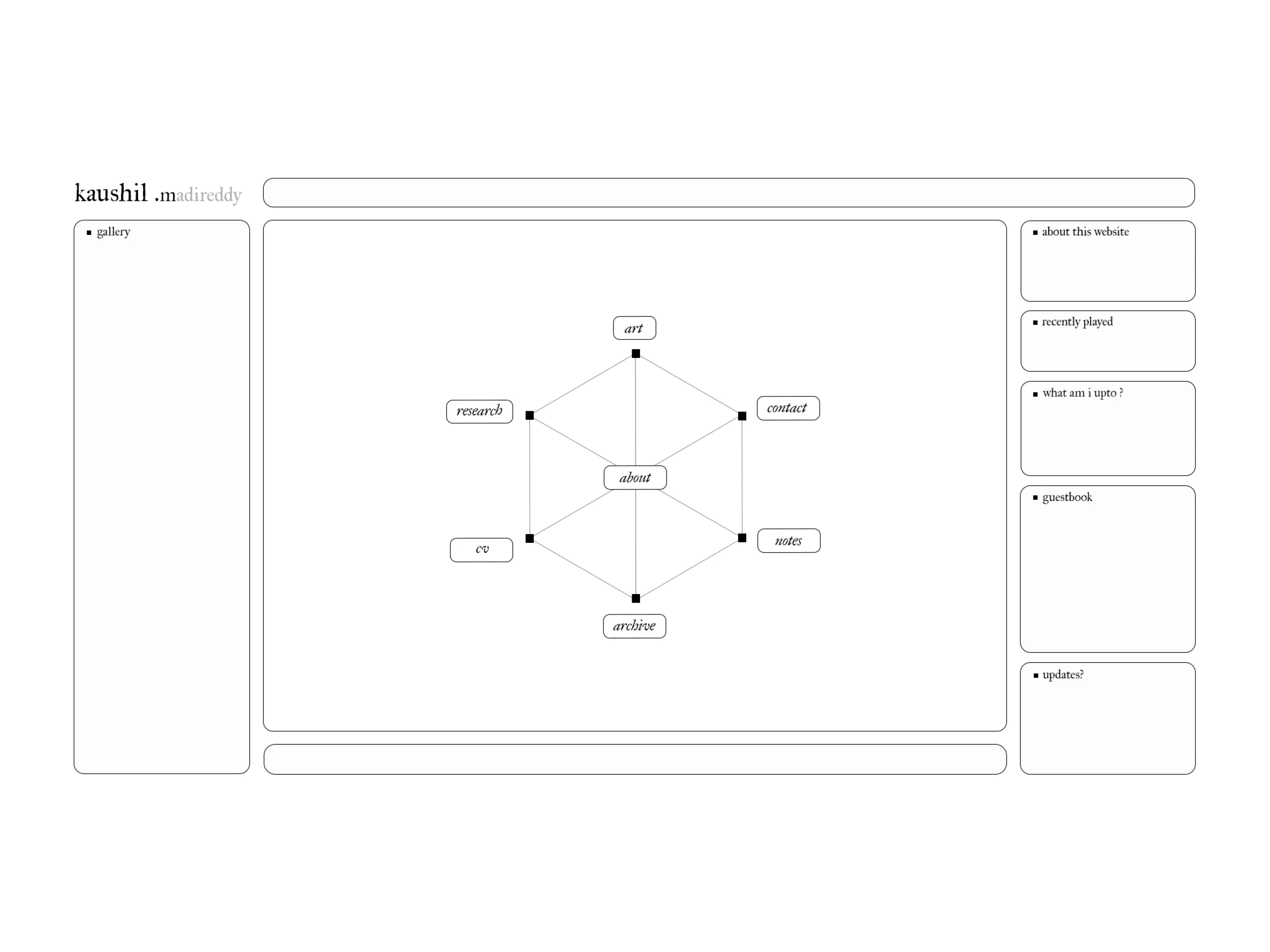
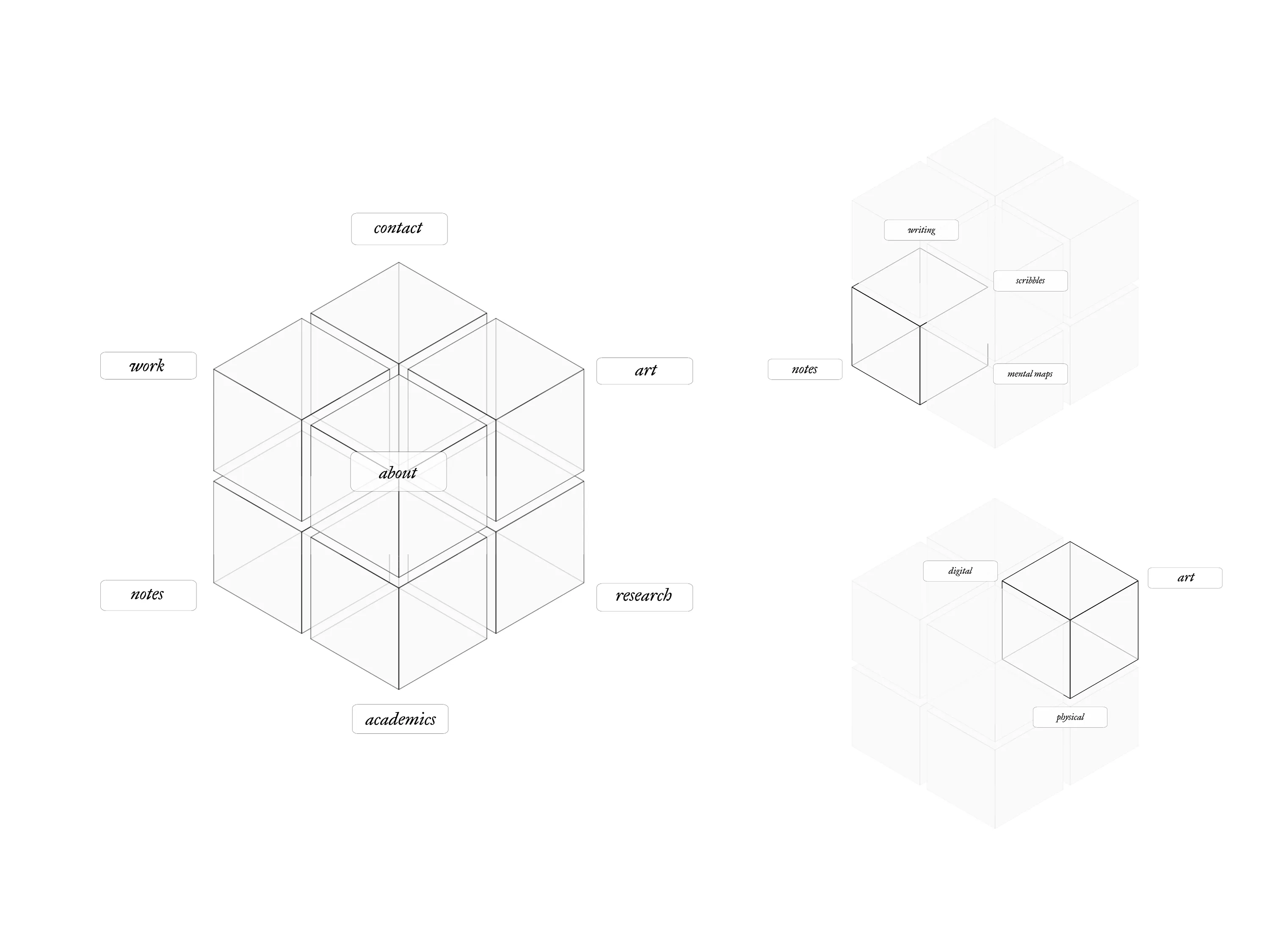
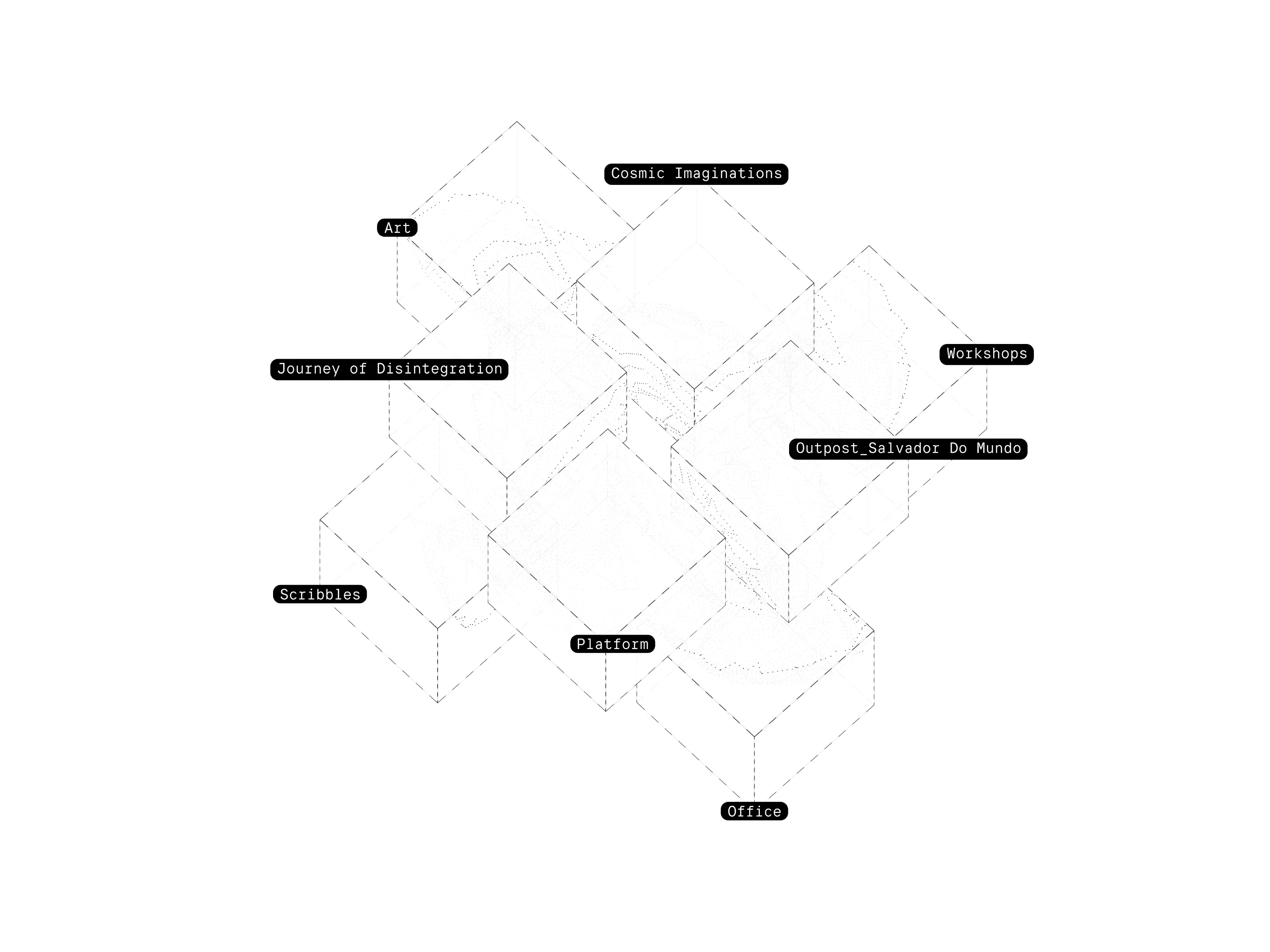
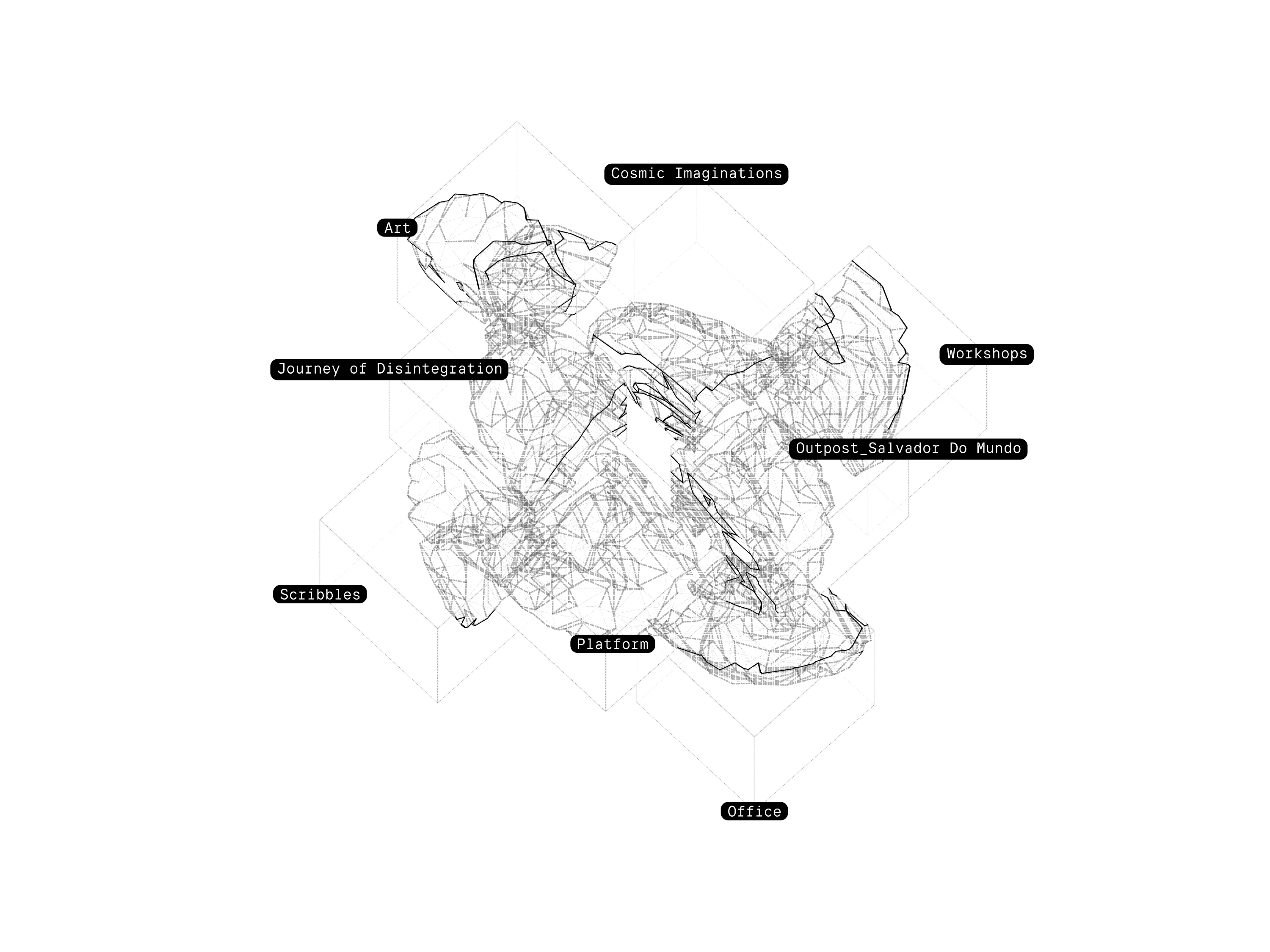
This personal website functions as a digital archive that evolves over time. Its homepage features an
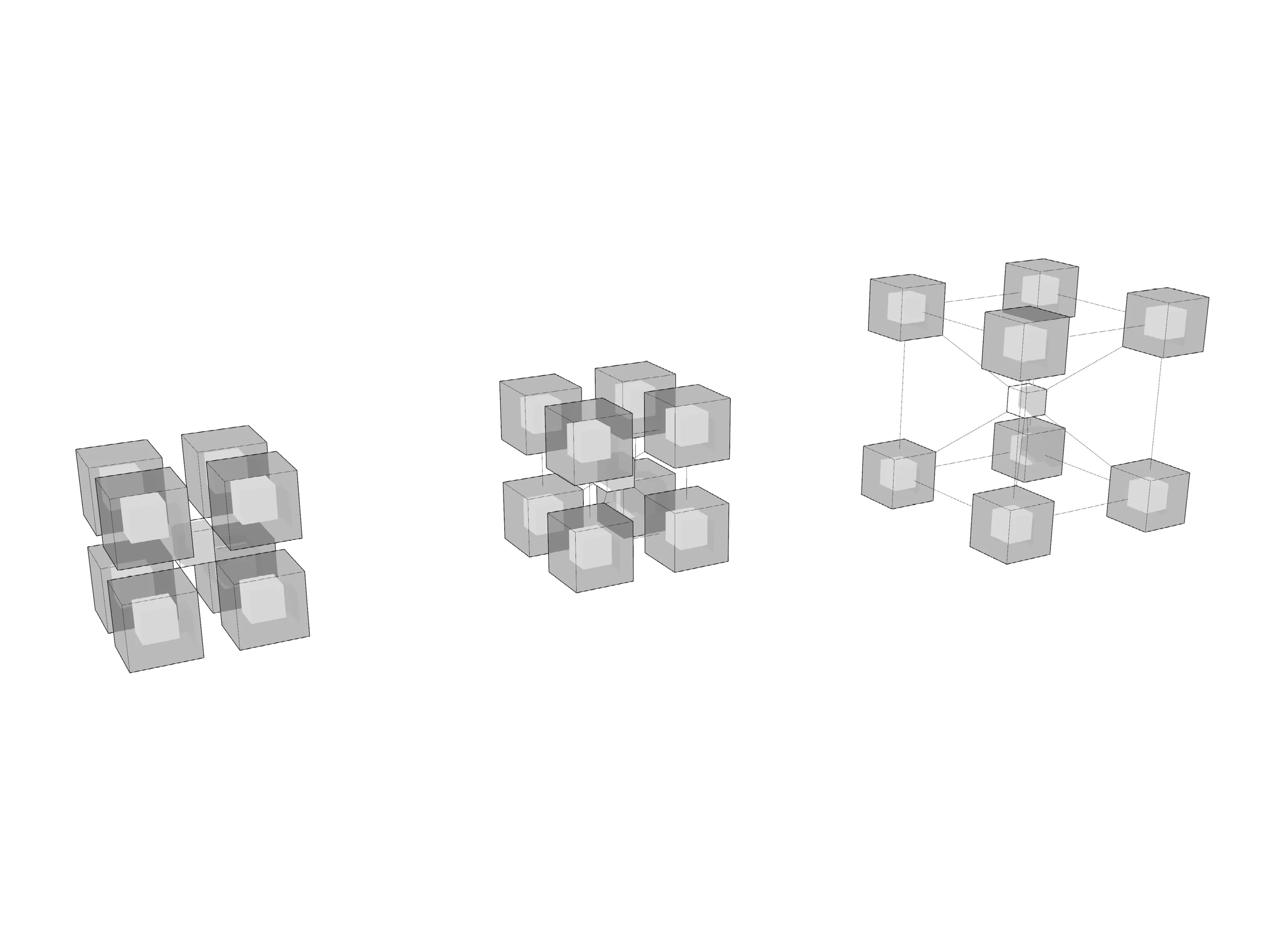
interactive, nested cube structure where my work is organized into individual vertices. Each vertex connects
to a central core that anchors the entire geometry.
A couple of days ago, I was reading an article by artist Tamiko Thiel about the design of the first-generation
supercomputers known as the "Connection Machine" (the CM1 & CM2). To resolve a packaging issue with
integrating a vast number of processors, the team needed a radical solution. Richard Feynman became involved
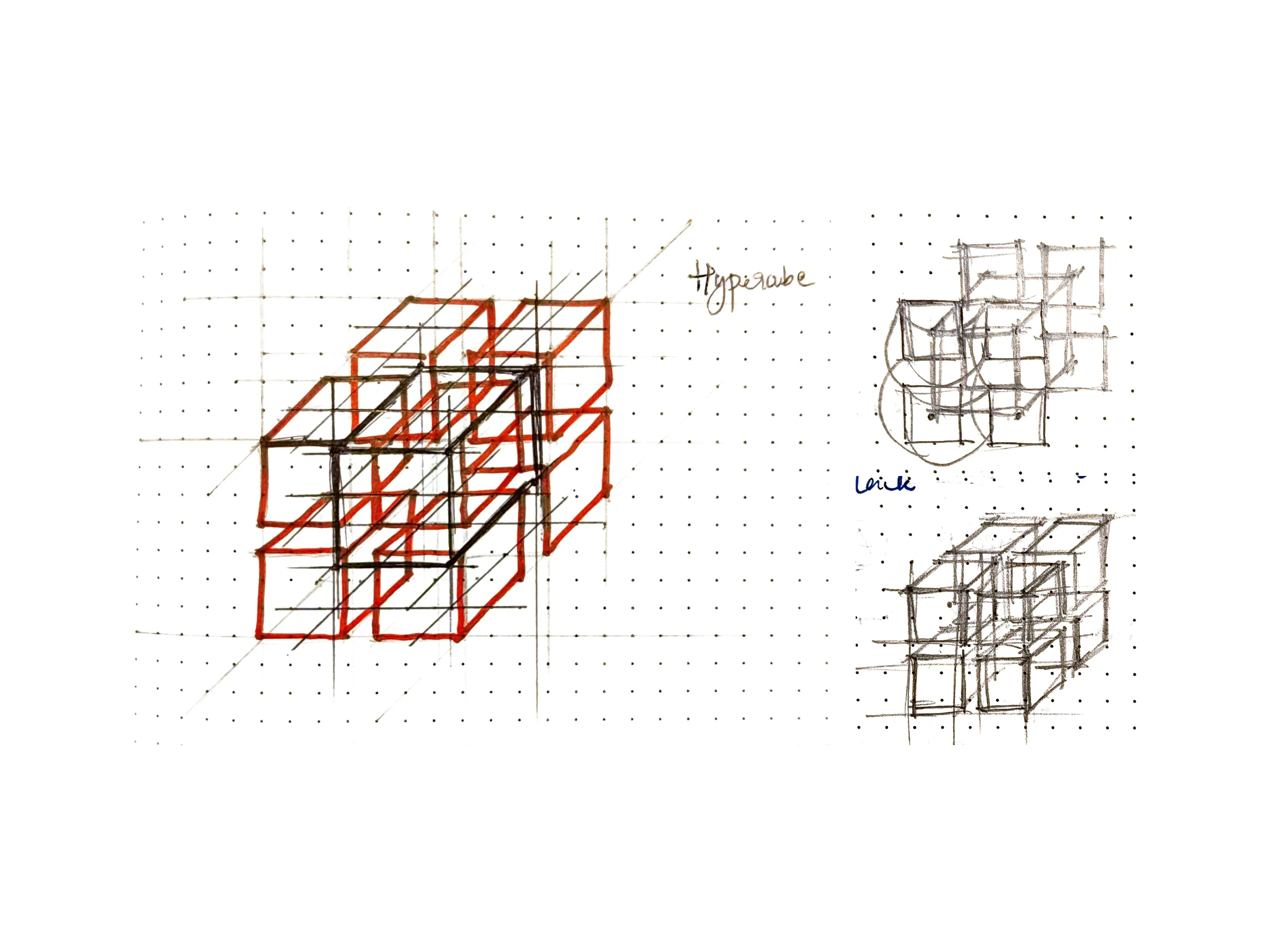
and proposed a diagrammatic approach: constructing a 4D hypercube that integrates a cube into each of its
vertices, essentially forming a "tesseract" (a cube inside a cube). This structure was then multiplied to form
a 12th-dimensional hypercube, connecting nearly 4,096 chips to create the CM2. Tamiko, an artist who was a
crucial member of the design team, helped build this "electronic brain", which physically embodies that
diagrammatic vision. (Thiel, 2018)
In the process of bringing life to this machine, Tamiko attempted to express the internal, sterile, and
otherwise uninteresting computer circuits through its outer form, representing function on the outside.
What I find particularly fascinating is how an artist (collaborating alongside an architect) was integral to
designing a machine's architecture. It required a deep understanding of intricacies and complexities,
perfectly exemplifying how this process transcends disciplines. Here, boundaries aren’t just blurred; they are
bypassed to create machines that were once merely speculated to assist humankind.
The cube you interact with on this website is a 6D hypercube, which is inspired by Feynman’s diagram.
Feynman’s intuitive relationship with complex structures always left me in awe since it requires spatial
thinking and immense visualisation power to process abstract theories like quantum phenomena. This authentic
pictorial translation of structures is something which employs tools from one or more disciplines. My
hypothesis would be that these particular cross-curricular skill systems are going to be in demand since the
rise in AI already appears to diminish single-competency professions.
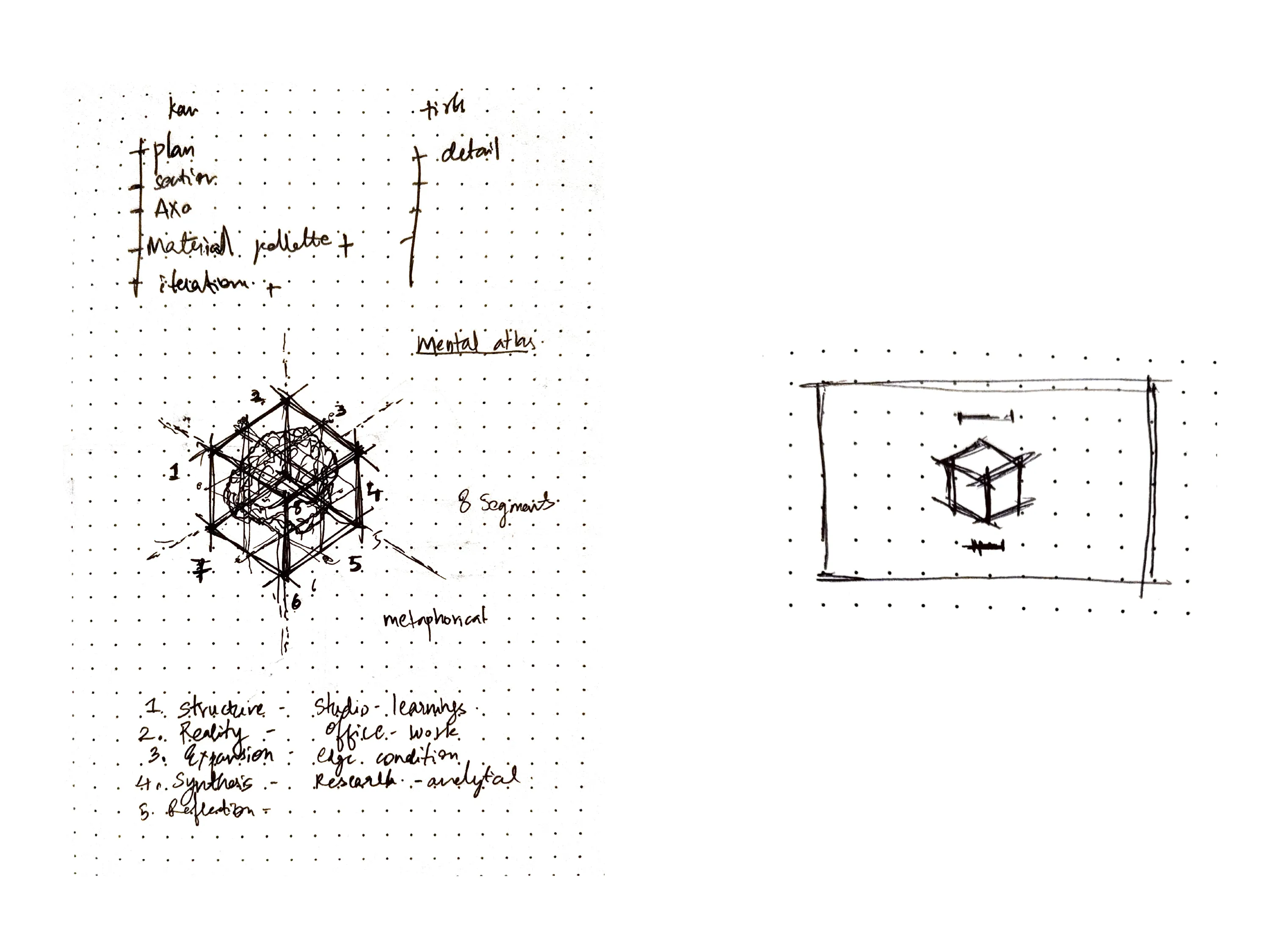
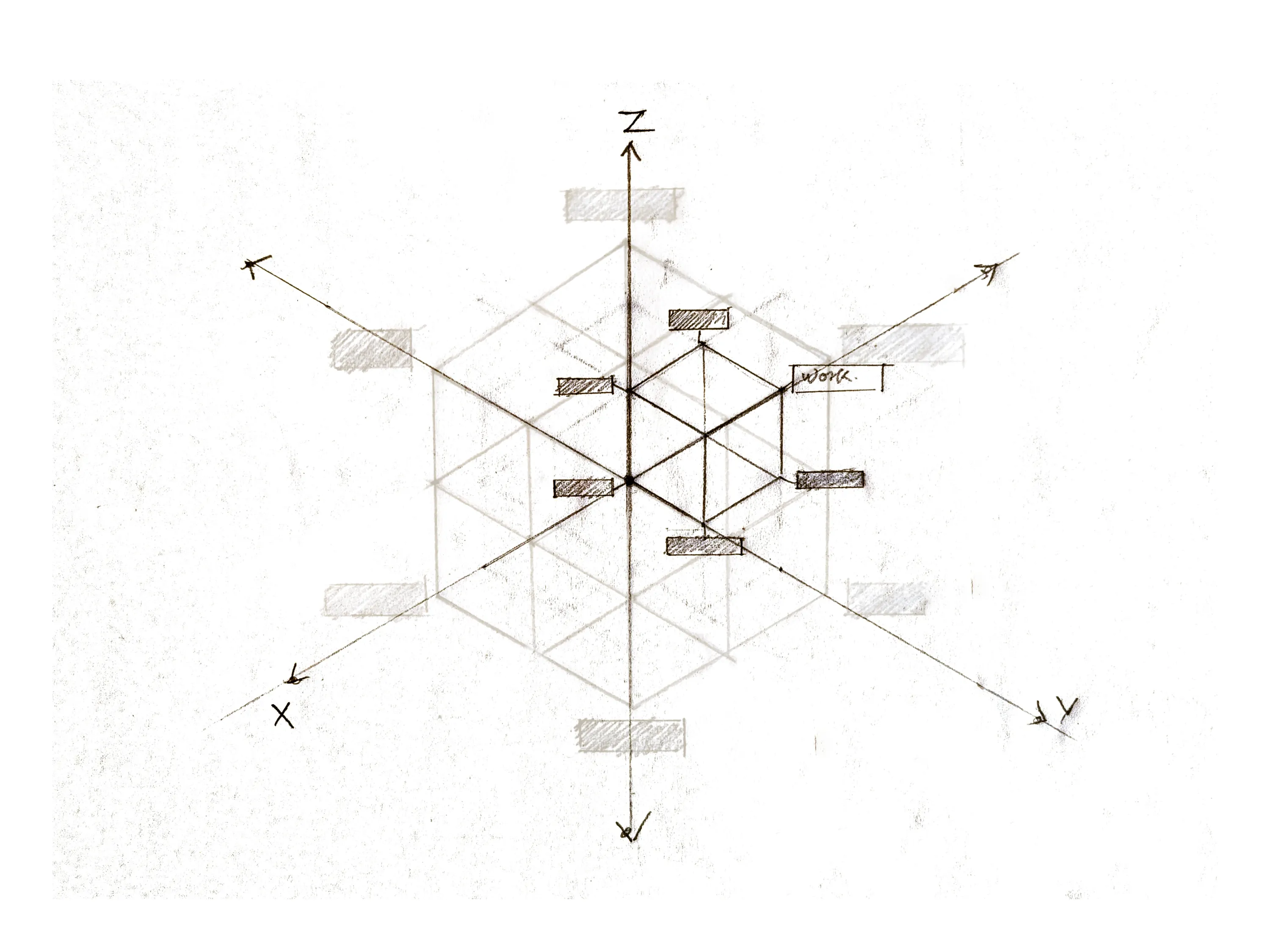
Interestingly, when I set out to create this website, the very first thing I sketched on paper was a cube,
which I gave the working title "unknown geometry". I focused on establishing a primitive form of interaction
that provided the scope to build something meaningful by altering dimensions along the X, Y, and Z axes.
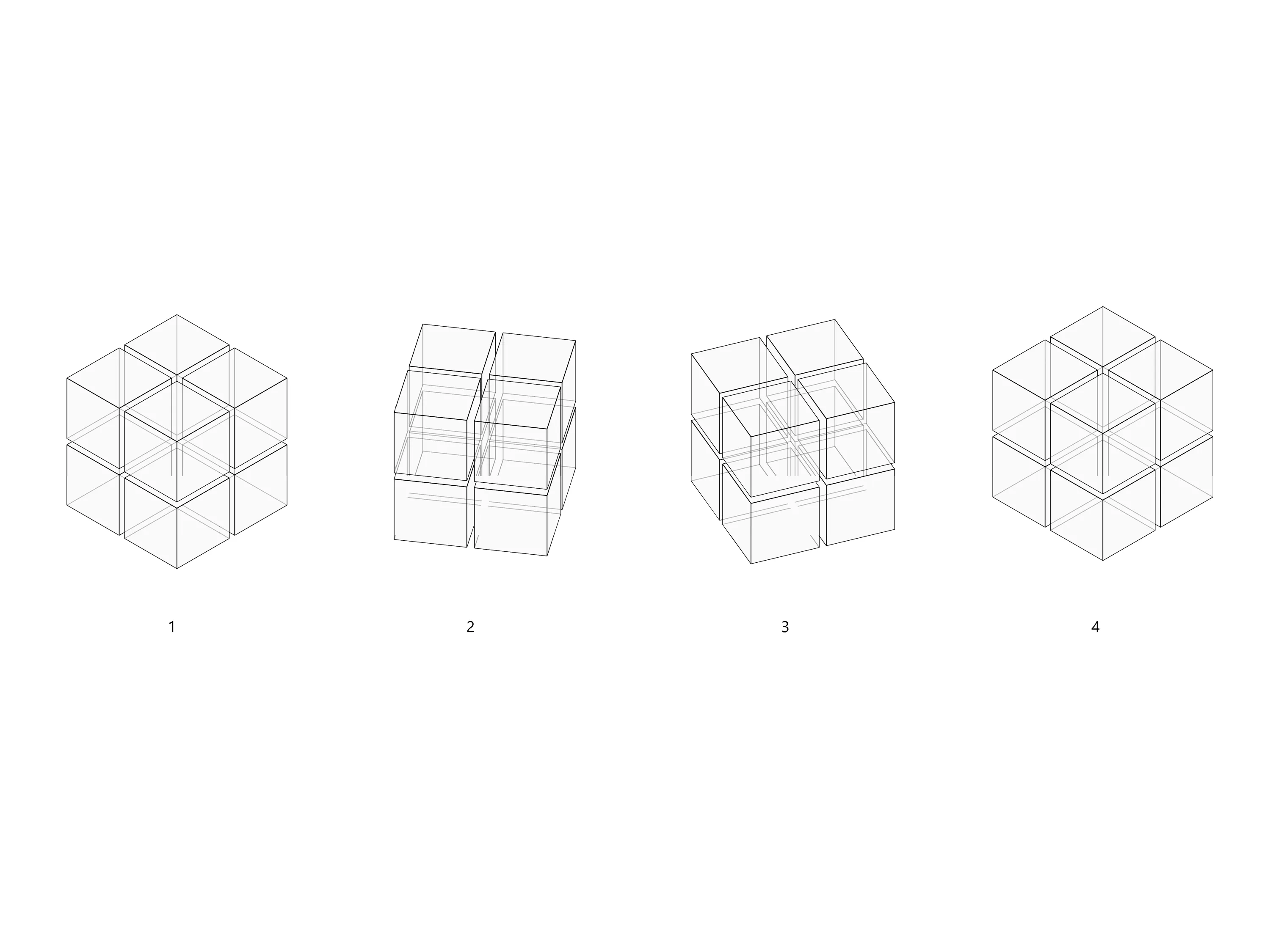
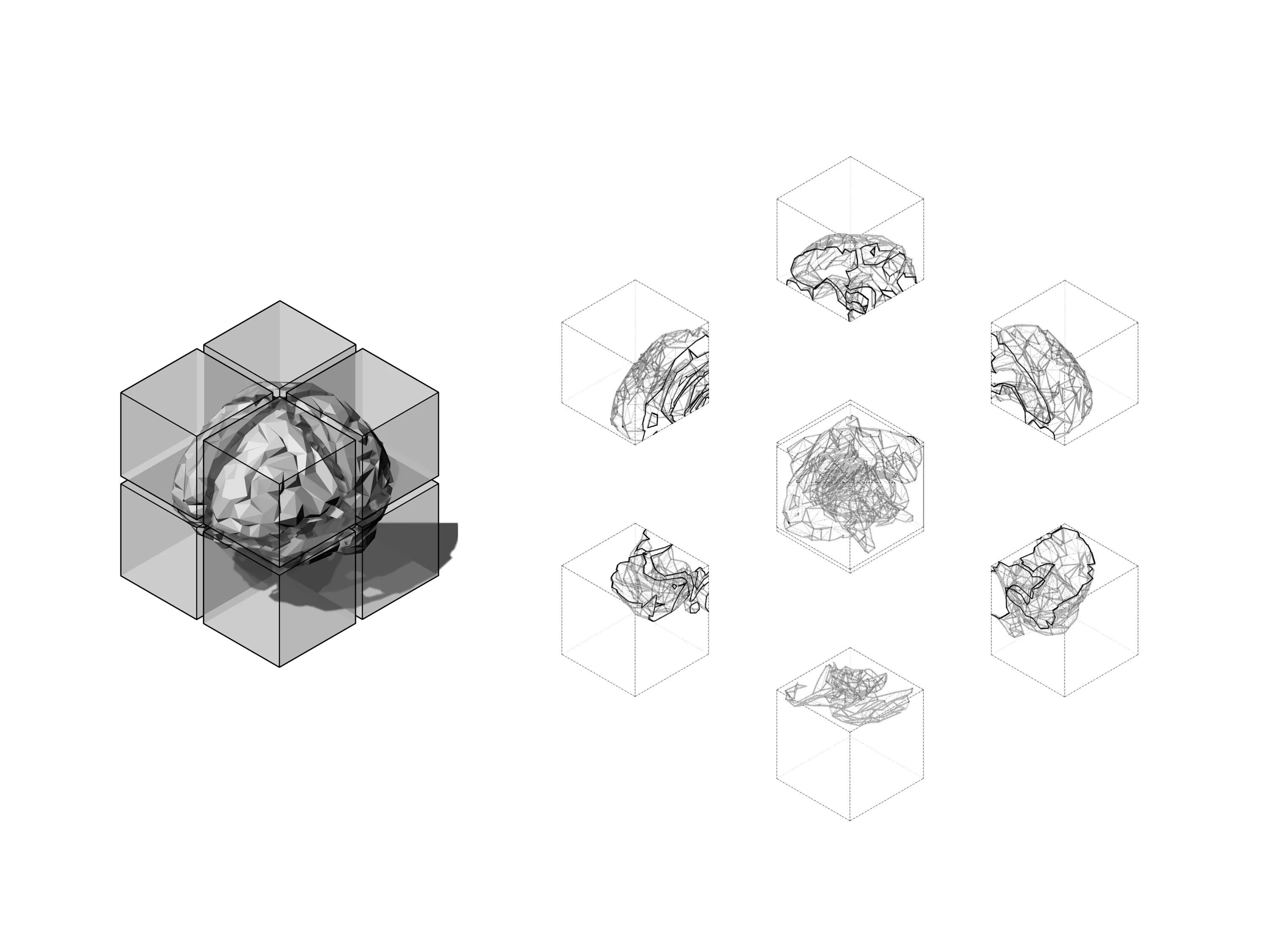
I have made several iterations with a human brain inside them because I was always fascinated by how a
cross-section of such an organic engine would look. But it felt too tacky in the present dev stage, so I
decided to scrap it. (Look for sketches above if interested.)
References:
Thiel, T. (2018). ‘The design of the connection machine' – article in the DesignIssues journal, Tamiko Thiel.
Artificial intelligence parallel
programming supercomputer design. https://tamikothiel.com/theory/cm_txts/
Built using Claude Opus + Sonnet 4.6, OpenAI's Codex, Gemini 3.1 pro,
nemotron 3 ultracloud & qwen
3.5:9b.
Code editors: Antigravity IDE, VSCode & OpenCode